How Escrow Protects Buyers
Updated July 30, 2026 · Reviewed by Kirill Novikov, FlipGift founder
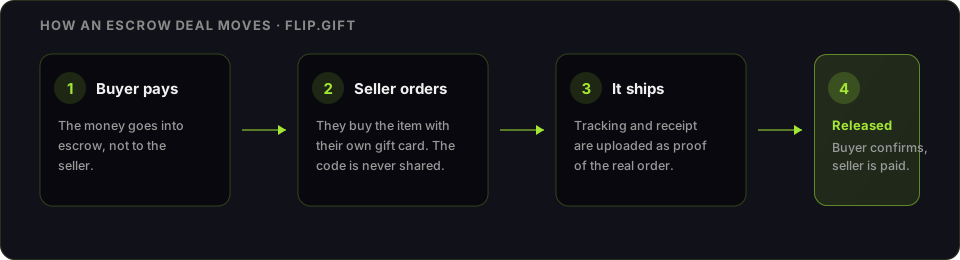
Escrow shopping runs on a simple inversion of trust: nobody gets your money until you get your stuff. This page walks through exactly what stands between your payment and a seller — because "a stranger orders for me and I save money" reasonably triggers skepticism until you see the mechanics.
The money's path
When you request an order, you pay the agreed below-retail price into escrow — not to the seller. The seller sees that the funds are locked before they spend a cent of their gift card balance placing your order. From that moment:
- The seller places your exact order at the store, shipped to your address, and uploads the order confirmation plus a carrier tracking number.
- You watch the same tracking they do.
- When the package arrives and you confirm it, escrow releases the payment to the seller.
- If it never ships, you're refunded. If something's wrong, you open a dispute before any money moves.
The seller is paid for delivery, not for promises — that ordering is exactly backwards from every "pay a stranger and hope" scam, which is the point.
What the seller can and cannot do
The seller's only power is placing a retail order with their own gift card, from their own account, to your address. They never see your payment details — the escrow holds your money, not the seller. They can't redirect the funds, and not shipping means not getting paid. The failure mode of classic gift card fraud — someone takes value and disappears — has nothing to grab here.
What you get, concretely
- A normal retail order. The store ships it like any other purchase — same product, new and sealed, with the manufacturer's warranty. One honest caveat: a store return would credit the seller's original payment, so problems are handled through escrow instead — report before confirming receipt and you're refunded in full.
- Tracking you verify yourself. The carrier number is yours to watch; delivery confirmation is against that record, not the seller's word.
- A dispute process with evidence. Order screenshots, tracking history and delivery records are all on file. If the item is wrong or damaged, the dispute is reviewed before escrow releases anything.
- No card codes anywhere. You never buy, hold or redeem a gift card — so the entire category of drained-code and fake-code scams is structurally absent.
Where the discount comes from (no, it's not a catch)
The seller is holding a gift card they won't spend. Cashing it out at a buy-back site costs them 15–25% of face value. Selling you their purchasing power through escrow nets them more than that — while still charging you below retail. The spread the middleman used to keep is split between you two. That's the entire trick: no coupons, no arbitrage, no gray-market codes.
Try it against the catalog
The full store catalog lists every store this works at, grouped by category — from clothing and shoes to electronics and gaming. Each store page explains what people typically order there. When you're ready, the discount shopping overview walks the request flow end to end.
Frequently asked questions
When exactly is my money released to the seller?
What if the item arrives damaged or wrong?
Does the seller learn my payment details?
Are returns possible on escrow orders?
From the blog
How to Verify Gift Card Balance Before Trading a Card
Before you list, swap, or sell a gift card, confirm what's actually on it. Here's why balance checks matter and the three fastest ways to do one.
Can You Return Gift Cards? The Real Rules in 2026
Most stores treat gift cards as final-sale. But there are real exceptions — and if yours doesn’t qualify, you still have a way to get full value out.
What to Do With Unwanted Gift Cards: 6 Smart Options
Stuck with a card you'll never use? Here are six realistic options for unwanted gift cards, ranked by how much value you actually keep.