Gift Cards for Cash: What You'll Actually Get
Updated September 29, 2026 · Reviewed by Kirill Novikov, FlipGift founder
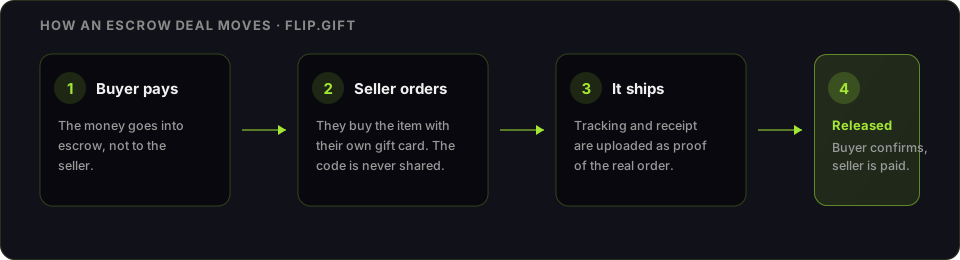
Let's be upfront twice over. First: every cash-for-code buyer pays you less than the card is worth — that discount is how they make money. Second: FlipGift never buys your code. Here you sell the card for cash through escrow — you keep the card, fulfil a verified buyer's order with it, and get paid without the number and PIN ever leaving your hands. This page lays out every route honestly so you can pick the right one.
Where people get cash for gift cards
- Online resale marketplaces. Sites like CardCash, GiftCash, and Raise buy or broker unwanted cards. Offers vary widely by brand and demand — popular brands fetch the strongest rates, niche brands much less — but every offer is below face value, and you hand over the code to get paid. See our breakdowns of CardCash, GiftCash, and Raise.
- FlipGift Escrow. You keep the card and redeem it yourself to fulfil a buyer's order; the buyer's money is held in escrow until delivery is confirmed. Typical net 72–88% of face value after a flat 5% fee — and the code never changes hands.
- Kiosks — mostly gone. The gift-card exchange kiosks that used to sit in grocery stores have largely disappeared, and they were the lowest-paying option when they existed. Details in our kiosk guide.
- Small-balance cash-back laws. In about a dozen US states, retailers must cash out small remaining balances (commonly under $5–$10, varying by state) at the register. Useful for clearing out stragglers, not for a fresh $100 card.
The cash-for-gift-cards scams to avoid
Cash-for-cards is one of the most scam-dense corners of the internet. Three rules keep you safe:
- Never give a code to an individual stranger who pays "after checking the balance." The balance disappears and so do they. This is the classic Craigslist / Facebook Marketplace pattern — and it's the exact flaw that made us retire our own card-for-card swap in July 2026: once a code changes hands, the previous owner can still drain it.
- Never sell one card on multiple sites at once. The first sale drains it; the second buyer reports you for fraud.
- Be wary of "we pay 95–100%" promises. No legitimate cash buyer pays face value — the discount is their entire business model.
The safer route: sell without ever sharing the code
The reason resale buyers discount so heavily is the risk they take the moment your code arrives — it might be drained, disputed, or already sold elsewhere. FlipGift removes that risk by never moving the code at all. On FlipGift Escrow you keep the card, use it to fulfil a real buyer's order, and get paid from escrow on confirmed delivery — typically 72–88% of face value, more than most buy-back offers, with nothing to drain. Browse the live market to see what's trading now.
Which route fits you
Pick a resale buyer if you need dollars in your account this minute and don't mind handing over the code — compare a couple of quotes first, and read our selling guide. Pick FlipGift Escrow if you want to keep more of the value and never expose the code — start a sale through escrow and pocket the difference a buy-back buyer would have kept.
Wondering whether the card can go stale? Do Amazon gift cards expire? — short answer no, but Amazon promotional credits do.
Still deciding? Where to sell a gift card, every route compared sets out payouts, wait times and risk; the platform-by-platform table puts numbers on it, and the exchange route specifically covers kiosks and buy-backs.
Frequently asked questions
How much cash can I get for a gift card?
Does FlipGift pay cash for gift cards?
Can I get cash for a gift card instantly?
Are gift card cash kiosks still a thing?
What's the safest way to get cash for an unwanted gift card?
From the blog
How to Verify Gift Card Balance Before Trading a Card
Before you list, swap, or sell a gift card, confirm what's actually on it. Here's why balance checks matter and the three fastest ways to do one.
Can You Return Gift Cards? The Real Rules in 2026
Most stores treat gift cards as final-sale. But there are real exceptions — and if yours doesn’t qualify, you still have a way to get full value out.
What to Do With Unwanted Gift Cards: 6 Smart Options
Stuck with a card you'll never use? Here are six realistic options for unwanted gift cards, ranked by how much value you actually keep.