GiftCash Alternative: Sell Without Handing Over the Code
Updated October 15, 2026 · Reviewed by Kirill Novikov, FlipGift founder
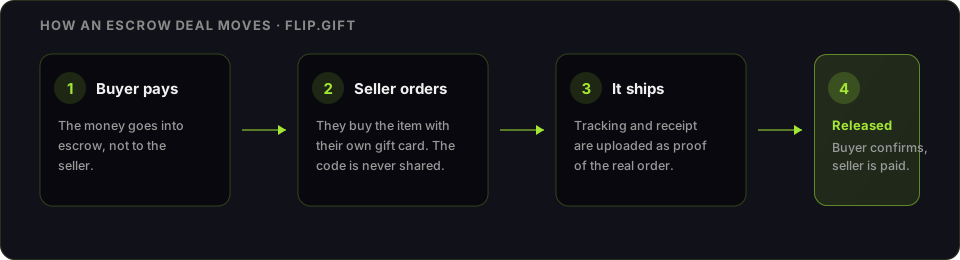
GiftCash buys gift cards for cash and advertises rates of "up to 93%". What it doesn't lead with is time: its own U.S. homepage shows an average payout of 24.8 days, the BBB rates it F, and Trustpilot scores it 1.9 out of 5 from 1,502 reviews (checked October 15, 2026). And, like every buy-back service, it needs your card number and PIN before it pays. FlipGift takes a different route: an escrow sale where you keep the card and the code never leaves your hands. Here's the comparison — the full picture is in our GiftCash review.
How GiftCash works in 2026
- You submit the code first. Pick the brand, accept the offer, then enter the number and PIN — or photos, or mail a physical card with tracked postage taken out of your payout. GiftCash verifies the card and may resell it.
- Rates below the headline. No U.S. brand was listed at 93% on September 23; the top was Home Depot at 91% for $250–$2,000 cards, Amazon was 75%, and the median was around 72%.
- Paid to a wallet, then cashed out. Payouts land in a GiftCash wallet; you then request ACH, Zelle ($1 fee), PayPal (capped at $250 per transaction), wire or crypto. Priority processing costs 5 rate points and guarantees no date.
- Weeks, not minutes. 24.8 days is GiftCash's own U.S. average, with brand averages up to 85.6 days; support has quoted 10–15 business days.
- Terms that favour GiftCash. It may reduce, hold, reverse or claw back a payout if a card's balance turns out lower, and charge a saved credit card for losses it attributes to you. Sellers can request a review within 30 days of a rejection.
How FlipGift is different
- The code never leaves you. You keep the card and use it to place a buyer's order at the store's own checkout, so there is nothing for anyone to drain or dispute.
- The buyer pays first. Their money is locked in escrow before you do anything, and released to you when they confirm delivery — or automatically about 16 days after the parcel ships if they never respond.
- Typical net 72–88% of face value, after a flat 5% fee split with the buyer and the 2% withdrawal fee. You choose the discount.
GiftCash vs FlipGift
| GiftCash | FlipGift escrow | |
|---|---|---|
| What you hand over | The card number and PIN | Nothing — you place the buyer's order yourself |
| Advertised rate | "Up to 93%"; median around 72% | You set the discount; typically 72–88% net |
| When you're paid | 24.8 days on average (GiftCash's own figure) | When the buyer confirms delivery |
| How you're paid | Wallet, then ACH, Zelle, PayPal, wire or crypto | Crypto or a digital prepaid Visa card |
| If the balance is disputed | GiftCash can cut or claw back the payout | Can't happen — the code never changed hands |
When GiftCash might still fit
GiftCash serves Canada through giftcash.ca, and FlipGift works with U.S. stores and U.S. delivery addresses. If you're selling a Canadian retailer's card, a Canadian buyer is the realistic route — just plan for the wait.
Other options
Every route compared — buy-back sites, marketplaces, kiosks — is in gift card exchange alternatives, and the real math on a $100 card is in the payout comparison.
Frequently asked questions
Is GiftCash legit?
How long does GiftCash take to pay?
What are GiftCash's fees?
GiftCash vs FlipGift — which is better?
Can I get full value for my card on GiftCash?
Does FlipGift pay cash like GiftCash?
Compare FlipGift with other ways to sell
From the blog
How to Verify Gift Card Balance Before Trading a Card
Before you list, swap, or sell a gift card, confirm what's actually on it. Here's why balance checks matter and the three fastest ways to do one.
Can You Return Gift Cards? The Real Rules in 2026
Most stores treat gift cards as final-sale. But there are real exceptions — and if yours doesn’t qualify, you still have a way to get full value out.
What to Do With Unwanted Gift Cards: 6 Smart Options
Stuck with a card you'll never use? Here are six realistic options for unwanted gift cards, ranked by how much value you actually keep.