Online arbitrage, and the race everyone else is running
Updated September 29, 2026 · Reviewed by Kirill Novikov, FlipGift founder
Online arbitrage is retail arbitrage without the driving: you find a product priced below its market on one website and resell it on another. Same arithmetic, same margins, different input — a browser and a set of tools instead of an afternoon in a car.
What the tooling actually does
The category is mature. Scanners crawl retailer sites against marketplace prices, price-history services show whether a listing's current number is normal or a spike, and repricers defend your position after you list. Sourcing lists sell the output of somebody else's crawl.
All of it does one job well: it finds public discounts faster. That is a real advantage over walking a store, and it lifts the ceiling that limits physical sourcing — your own time.
The ceiling it does not lift
A discount that a crawler can find is a discount every other crawler can find. That is not a criticism of the tools; it is what they are for. But it decides the shape of the business:
- The window is short. A genuinely good spread is bought out, then listed by everyone who bought it, and the sale price falls to meet the supply.
- You are bidding against people with the same data. The better the tool, the more equal the field.
- The retailer chose the price, and it will end when their promotion does.
So the work becomes speed and volume: crawl more, decide faster, accept thinner spreads. Plenty of people make that work. It is just worth naming what it is — a race on public information.
A discount that is not on anyone's crawl
There is a second kind of below-retail price, and no scanner sees it, because it does not live on a retailer's website at all.
People end up holding store credit they will not spend — a balance at a shop they do not use. To them it is worth less than its face value. To someone who wants the goods, it is worth the goods. That gap is private, standing, and it does not expire when a promotion does.
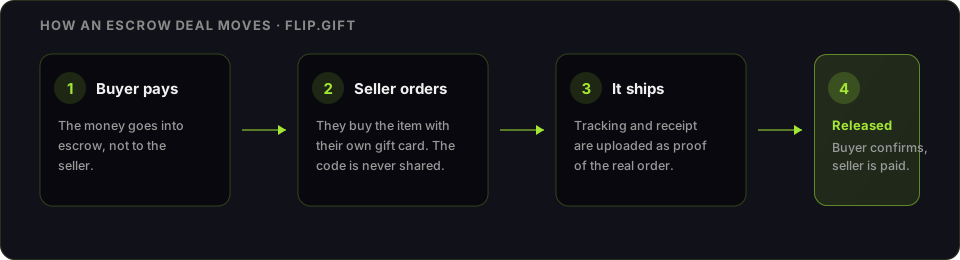
FlipGift is that trade with escrow in the middle. You post a product link from a US store; someone holding balance there places the order in their own account and ships it to you; you pay 8–40% under the store's price in USDT, USDC, DAI or PYUSD, and the payment is held until you confirm delivery. The settled deals so far average 25% off.
| Online arbitrage as usually practised | Buying through held balance | |
|---|---|---|
| Where the discount lives | The retailer's public price | A private mismatch between two people |
| Who else can see it | Everyone with the same tool | Nobody — it is not a listing |
| Repeatable? | Only while the promotion runs | Yes, subject to who is offering that store today |
| Depends on | Speed | Availability in the pool |
| Paid with | A card | USDT, USDC, DAI or PYUSD |
The honest limits. The order is placed in the seller's account, so the receipt carries their name — no use for brand ungating. A deal caps at $2,000 on the entry tier ($4,000 a day), the largest single order the pool can absorb is $5,000, and supply moves daily; the live market page says what is actually there right now. Delivery is to US addresses only — from outside the country, this is the route.
It is not a replacement for a scanner. It is the other half of a sourcing mix: one source that is fast and public, one that is slower and private. What the pool is offering today → · The same argument, in physical stores →
Related guides
Frequently asked questions
What is online arbitrage?
Why do online arbitrage margins keep getting thinner?
What is a source of below-retail prices that tools cannot find?
Does this work for restricted or gated brands?
From the blog
How to Verify Gift Card Balance Before Trading a Card
Before you list, swap, or sell a gift card, confirm what's actually on it. Here's why balance checks matter and the three fastest ways to do one.
Can You Return Gift Cards? The Real Rules in 2026
Most stores treat gift cards as final-sale. But there are real exceptions — and if yours doesn’t qualify, you still have a way to get full value out.
What to Do With Unwanted Gift Cards: 6 Smart Options
Stuck with a card you'll never use? Here are six realistic options for unwanted gift cards, ranked by how much value you actually keep.