Retail arbitrage, and the only number you control
Updated September 1, 2026 · Reviewed by Kirill Novikov, FlipGift founder
Retail arbitrage is buying a product from a retailer below what it sells for somewhere else, and keeping the difference. Someone finds a clearance endcap at Target, lists the item on Amazon, and pockets the spread. It is legal, it is old, and it is one of the few businesses you can start on a Saturday with a phone and $200.
It is also, arithmetically, a business with exactly one lever — and most people spend their time on the other three.
The arithmetic, written out
Take a $100 item that sells for $130 on a marketplace:
| Sale price | $130.00 |
| Marketplace fee (~15%) | −$19.50 |
| Shipping / fulfilment | −$8.00 |
| Your buy price | −$100.00 |
| Profit | $2.50 |
Three of those four lines are set by other people. The marketplace publishes its fee, the carrier publishes its rate, and the sale price is whatever the market will bear on the day you list. The buy price is the only line you negotiate. Every dollar you take off it is a dollar of profit, undiluted — and at a 20% discount that same item nets $22.50 instead of $2.50.
That is why sourcing, not selling, is the whole craft.
Why clearance hunting stops scaling
The classic method is to walk stores and scan. It works, and it has three ceilings that arrive in this order:
- Inventory is accidental. You cannot order more of a thing that happened to be on a clearance shelf, so nothing you find is repeatable.
- The discount is public. Anyone with the same app sees the same endcap, and the listing price collapses as they all list.
- Your time is the input. Doubling the sourcing means doubling the driving.
Online arbitrage moves the same method to a browser and lifts the third ceiling, not the first two. How that changes the work →
Is retail arbitrage legal?
Reselling goods you own is ordinary commerce, and in the US the first-sale doctrine is the usual reason given. What actually stops people is not the law but platform rules: marketplaces gate certain brands and categories, and to sell in them they typically ask for invoices from an authorised distributor in your own business name. A store receipt is not that, whoever bought it.
So the honest framing is: arbitrage is legal, and ungated is a separate question you settle with the platform, not with a supplier.
Gift card arbitrage, and where it runs out
The other well-known way to cut a buy price is to buy the store's own credit below face — a $100 card for $92 — and pay with it. It works, and it is the same mechanism as everything below, but at consumer scale it has two hard limits: the discount on a resold card is usually thin, and buying enough of them to matter means holding a lot of codes you are responsible for.
There is a version of that trade without the codes.
The lever most resellers never touch
Plenty of people are sitting on store credit they will not spend — a balance at a store they do not shop at is worth less to them than cash is. To you it is worth the goods. That gap is a standing discount rather than an accidental one: it does not depend on a clearance shelf, and it does not vanish when somebody else finds it.
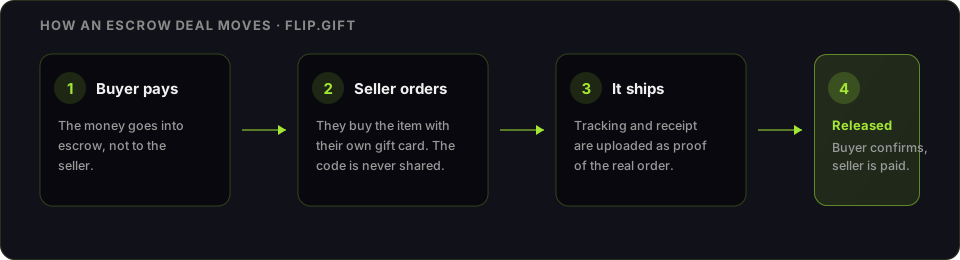
That is what FlipGift is. You post the product link from a US store; someone holding balance there places the order in their own account and ships it to your address; you pay 8–40% under the store's price, settled in USDT, USDC, DAI or PYUSD, with the money held in escrow until you confirm the parcel arrived. Deals settled so far average 25% off.
What it does not do, said plainly:
- The receipt carries the seller's name, because they placed the order in their account. If you need invoices in your own business name to ungate a brand, this route cannot produce them.
- The entry tier caps a deal at $2,000 ($4,000 a day), and the largest single order the pool can absorb is $5,000. Limits rise with completed deals.
- Supply is finite and moves daily. What the pool holds right now, store by store, is on the live market page — check it before you plan a buy.
- US delivery addresses only. If you are sourcing from outside the country, here is how that works.
Used for what it is — a repeatable few points off the buy price on stores that ship — it moves the only line in the table you were ever able to move. See what the pool is offering today →
Related guides
Frequently asked questions
What is retail arbitrage?
Is retail arbitrage legal?
How do resellers actually lower their buy price?
Can I use this to source for Amazon FBA?
From the blog
How to Verify Gift Card Balance Before Trading a Card
Before you list, swap, or sell a gift card, confirm what's actually on it. Here's why balance checks matter and the three fastest ways to do one.
Can You Return Gift Cards? The Real Rules in 2026
Most stores treat gift cards as final-sale. But there are real exceptions — and if yours doesn’t qualify, you still have a way to get full value out.
What to Do With Unwanted Gift Cards: 6 Smart Options
Stuck with a card you'll never use? Here are six realistic options for unwanted gift cards, ranked by how much value you actually keep.