What we ask for, and what we never do
Updated August 20, 2026 · Reviewed by Kirill Novikov, FlipGift founder
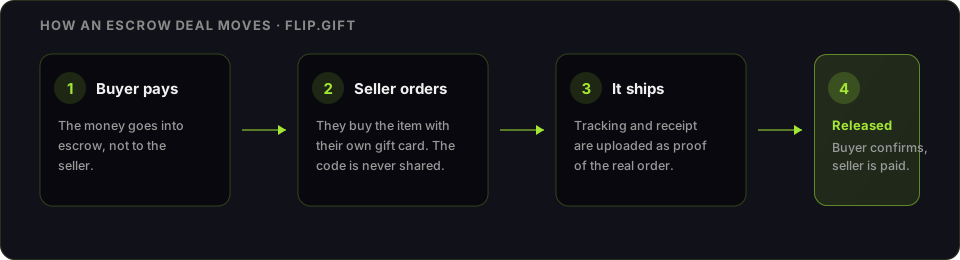
People searching for "no KYC" usually want one specific thing: to buy something without handing a stranger a photograph of their driver's licence. That is a reasonable thing to want, and it is how this works. What follows is the precise version, including the parts that are not anonymous, because a page that oversells this is worse than useless.
What we never ask a buyer for
- No identity document, passport or driver's licence.
- No selfie, no liveness check.
- No bank login, no account or routing number.
- No card number and no CVV — there is no card form on the site at all.
- No social security number, no date of birth, no employment questions.
There is nothing to upload because the payment rail does not need it: a stablecoin transfer authenticates itself.
What we do need
- An email address. It is your account, and it is where deal notifications go.
- A US shipping address. This is the unavoidable one. Someone is buying a physical item and posting it to you; a parcel needs somewhere to go. The address is checked against the order proof so a seller cannot ship elsewhere and claim they did.
- Nothing else, to buy. Deposit stablecoins, post an order, pay, confirm delivery.
Money leaving the platform is where scrutiny lives: withdrawals are reviewed and sent by a person, and a security hold applies that shrinks as your history grows. That is fraud control on outgoing funds, not identity collection — you are not asked for documents at that step either.
Where this stops being "anonymous"
Say it plainly, because the search term implies more than the product delivers:
- Your shipping address is real and both the seller and arbitration see it.
- The deal chat is screened — automatically for card codes and off-platform contact, and by a person when a dispute is opened.
- A dispute is decided on evidence, which means someone reads the chat, the order screenshot and the tracking.
- The service is US-only, and orders that would ship elsewhere are stopped before a deal starts.
So: no documents, no bank, no card — and also no pretence that a delivered parcel is an anonymous transaction. How the payment itself works →
Why it can work this way at all
Because nothing here is a money transmission to a stranger. You fund an escrow, a seller buys a product at a store, the store ships it to you. The card code never moves between the two sides, and the platform never holds a card number — the two facts that force most gift-card sites into identity checks in the first place. What the escrow actually holds →
Frequently asked questions
Do I have to verify my identity to buy?
Is this anonymous?
What about withdrawals — is there a check there?
Can I use a forwarding address or a PO box?
From the blog
How to Verify Gift Card Balance Before Trading a Card
Before you list, swap, or sell a gift card, confirm what's actually on it. Here's why balance checks matter and the three fastest ways to do one.
Can You Return Gift Cards? The Real Rules in 2026
Most stores treat gift cards as final-sale. But there are real exceptions — and if yours doesn’t qualify, you still have a way to get full value out.
What to Do With Unwanted Gift Cards: 6 Smart Options
Stuck with a card you'll never use? Here are six realistic options for unwanted gift cards, ranked by how much value you actually keep.