Crypto escrow, in the specific
Updated August 20, 2026 · Reviewed by Kirill Novikov, FlipGift founder
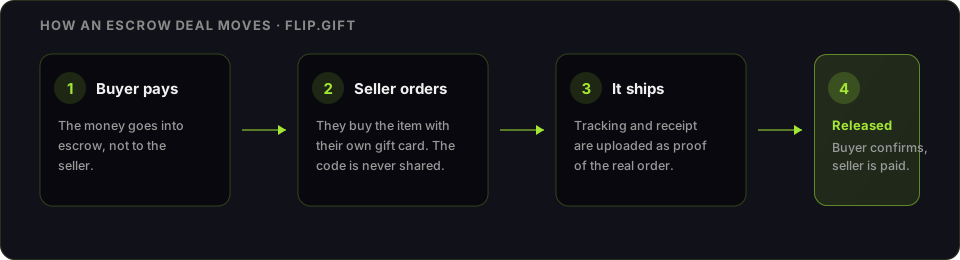
"Escrow" is the most abused word in crypto commerce, so this page answers the only three questions that matter: who holds the money, what event releases it, and what happens when the two sides disagree.
Who holds it
FlipGift does. Your stablecoin deposit sits as a balance in your account; the moment a deal is accepted, the discounted price moves out of that balance into escrow — not to the seller. This is custodial escrow, not a smart contract, and calling it anything else would be marketing: the thing being escrowed is an order at a retail store, and no contract on chain can see whether a parcel arrived. Someone has to make that call, so we say plainly that it is us, on evidence.
What releases it
| Event | What happens to the money |
|---|---|
| Deal accepted | The discounted price leaves your balance and enters escrow |
| Seller places the order | Nothing moves. They must upload an order screenshot and tracking |
| Parcel delivered, you confirm | Escrow releases the payment to the seller in full |
| Protection window closes with no dispute | Same release, automatically |
| You open a dispute | Nothing releases until arbitration decides |
| Arbitration finds for the buyer | Refund straight out of escrow |
The seller's obligations are enforced, not requested: proof of the order, tracking that matches, and a shipping address that matches the one on the deal. Failing them costs the seller a strike, and strikes remove sellers from the market.
What escrow is not
- It is not a chargeback. It protects against a seller taking money and not shipping. It does not cover you changing your mind about the item — the store's own return policy is what applies there.
- It is not custody of a gift card code. Codes never pass between the two sides, so there is nothing to steal or double-spend.
- It is not anonymity. A dispute is decided on evidence, which means chats, screenshots and tracking are read by a person. What we do and do not ask for →
Why this shape and not on-chain escrow
An on-chain escrow needs an oracle to say "delivered". For a parcel, that oracle is a human reading tracking and photos — which is exactly the role we already perform. Wrapping the same judgement in a contract would add gas and a smart-contract risk without moving a single decision out of human hands. What it would buy, we get another way: the ledger of every deal is auditable, the rules are written down, and the money never sits with the counterparty.
Where the coins fit
Escrow here is funded from a stablecoin balance: USDT, USDC, DAI or PYUSD, deposited from $10, no fee on our side. The whole payment route → · Which network to send on →
Frequently asked questions
Is this a smart contract escrow?
When exactly does the seller get paid?
What happens if we disagree?
Can I get the money back to my own wallet?
From the blog
How to Verify Gift Card Balance Before Trading a Card
Before you list, swap, or sell a gift card, confirm what's actually on it. Here's why balance checks matter and the three fastest ways to do one.
Can You Return Gift Cards? The Real Rules in 2026
Most stores treat gift cards as final-sale. But there are real exceptions — and if yours doesn’t qualify, you still have a way to get full value out.
What to Do With Unwanted Gift Cards: 6 Smart Options
Stuck with a card you'll never use? Here are six realistic options for unwanted gift cards, ranked by how much value you actually keep.