Coinsbee, and the price you actually pay
Updated September 1, 2026 · Reviewed by Kirill Novikov, FlipGift founder
Coinsbee is one of the larger crypto-to-gift-card catalogues, and the reason people search it is almost always the same pair of questions: can I trust it, and am I getting a deal. The first answer is straightforward; the second is where it gets interesting.
What it is
A voucher shop covering thousands of brands in well over a hundred countries, payable in a very wide range of coins and networks, with the code emailed as soon as the payment settles. Small orders need no account at all — a registration threshold kicks in around EUR 1,000, and identity checks only at much higher amounts. Its public review score is strong and long-running.
Is it legit? By the ordinary meaning of the question — do you get the code you paid for — yes, and thousands of reviews say so. The risks worth knowing are the ones inherent to codes rather than to the company: region-locked brands, non-refundable purchases, and a balance that is yours to protect once it exists.
The price question
A voucher costs its face value, occasionally with a small markup or network cost on top. That is not a criticism, it is the model: the shop buys credit wholesale and sells it at par, and its margin lives in that spread. Crypto here is a payment method, not a discount mechanism. You are converting coins into store credit, and the store's prices are unchanged.
Where the discount actually lives
Somebody, right now, holds a gift card for a store they do not shop at. To them it is worth less than its face value; to you, it is worth the goods. That gap is the only place a real discount on a retail order can come from, and it needs a way for the two of you to trade without either side being exposed.
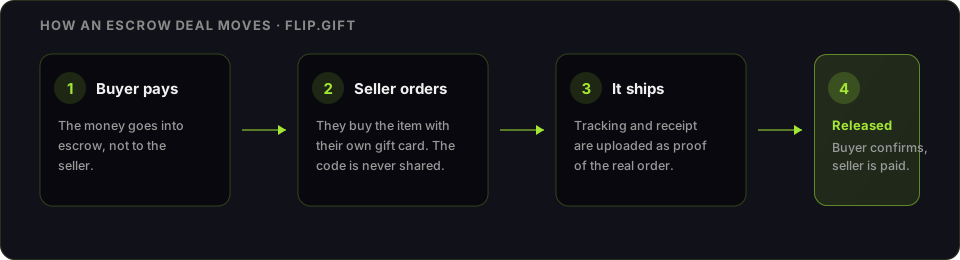
That is what escrow is for, and it is the whole of what FlipGift does: you post the product link, the balance holder buys it and ships it, and you pay 8–40% under the store's price in USDT, USDC, DAI or PYUSD. The money is held until you confirm delivery. No code ever lands in your inbox, which also means none can be region-locked, mis-typed or drained.
| Coinsbee | FlipGift | |
|---|---|---|
| Delivery | A code, by email, in minutes | The item, shipped, with tracking |
| Price | Face value, sometimes a small markup | 8–40% below the store's price |
| Coverage | Thousands of brands, 165+ countries | 200+ US stores, US addresses |
| Coins | 100+, many networks | USDT, USDC, DAI, PYUSD on five networks |
| Recourse | The code, once issued, is final | Escrow, evidence and a refund path |
Use a voucher shop when you need credit fast, anywhere, or when the brand is digital. Use an escrowed order when the thing you want is physical, American, and you would rather pay less for it. How paying in stablecoins works →
Other routes, compared the same way
Bitrefill · BitPay · eGifter · CoinGate · Gyft · CoinCards · CryptoRefills · NoOnes · Lolli · Fold · Purse.io · Paxful
One page per service, each saying where that service is the better tool than an escrowed order. How ours works →
Frequently asked questions
Is Coinsbee legit?
Are gift cards on Coinsbee cheaper than face value?
What is the alternative if I want the goods below retail?
Do I need an account for FlipGift?
From the blog
How to Verify Gift Card Balance Before Trading a Card
Before you list, swap, or sell a gift card, confirm what's actually on it. Here's why balance checks matter and the three fastest ways to do one.
Can You Return Gift Cards? The Real Rules in 2026
Most stores treat gift cards as final-sale. But there are real exceptions — and if yours doesn’t qualify, you still have a way to get full value out.
What to Do With Unwanted Gift Cards: 6 Smart Options
Stuck with a card you'll never use? Here are six realistic options for unwanted gift cards, ranked by how much value you actually keep.