CoinGate, and what it's actually built for
Updated September 1, 2026 · Reviewed by Kirill Novikov, FlipGift founder
Most people who search CoinGate are about to do one of two very different things, and the answer differs for each.
The two halves
The payment gateway. CoinGate has processed crypto payments for merchants since 2014 from Lithuania, licensed by the country's Financial Crime Investigation Service and operating under EU crypto-asset rules. Dozens of coins in, euro or dollar settlement out, plus a point-of-sale app. If a shop's checkout offers "pay with crypto", this is often the thing behind it — and in that case you are paying the shop, at the shop's price, with CoinGate converting in the middle.
The gift card marketplace. Separately, it sells gift cards for thousands of brands against crypto. Same shape as any card shop: you send coins, you get a code, and the code is worth its face value.
Is CoinGate legit? It is a licensed EU processor with more than a decade of operating history and public regulatory registration — as concrete an answer as this question gets. What licensing does not do is change what you pay.
What neither half does
Neither route lowers the price of the thing you are buying. A gateway converts your crypto to the merchant's dollars at checkout; a card shop converts it to store credit at parity. Both are conversions. The number on the invoice is the store's number either way.
The third shape
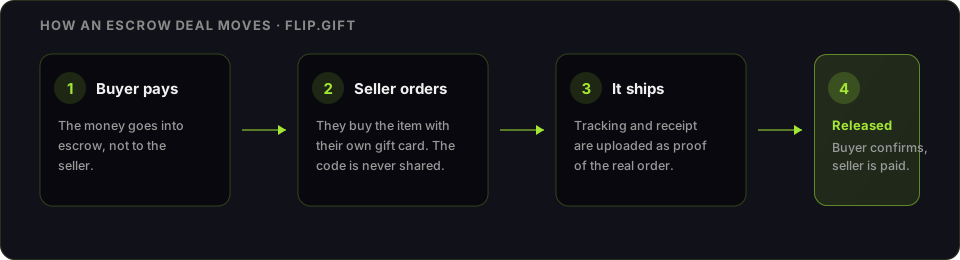
A discount can only come from somebody who values store credit at less than its face value — the person holding a gift card they will not spend. FlipGift is built around exactly that: they place your order with their balance, you pay them below the store's price, and escrow holds the money until you confirm the item arrived.
| CoinGate gateway | CoinGate cards | FlipGift | |
|---|---|---|---|
| You are paying | The merchant | CoinGate | A person holding store balance |
| Price you pay | The merchant's price | Face value | 8–40% under the store's price |
| What you receive | The merchant's order | A code | The order, shipped with tracking |
| Protection | The merchant's policy | The code is final | Escrow until delivery is confirmed |
When to use which
Use the gateway when a merchant you already want to buy from accepts it — that is a clean, regulated way to pay in crypto. Use the card marketplace when you need credit at a brand fast, anywhere in the world. Use an escrowed order when the thing you want is a physical item from a US store and you would rather pay less for it than pay list price in a different currency. How that works here → · What the escrow actually holds →
Other routes, compared the same way
Bitrefill · BitPay · eGifter · Coinsbee · Gyft · CoinCards · CryptoRefills · NoOnes · Lolli · Fold · Purse.io · Paxful
One page per service, each saying where that service is the better tool than an escrowed order. How ours works →
Frequently asked questions
Is CoinGate legit?
Does paying through CoinGate make things cheaper?
What is the alternative if I want the order below retail?
Which coins does FlipGift take?
From the blog
How to Verify Gift Card Balance Before Trading a Card
Before you list, swap, or sell a gift card, confirm what's actually on it. Here's why balance checks matter and the three fastest ways to do one.
Can You Return Gift Cards? The Real Rules in 2026
Most stores treat gift cards as final-sale. But there are real exceptions — and if yours doesn’t qualify, you still have a way to get full value out.
What to Do With Unwanted Gift Cards: 6 Smart Options
Stuck with a card you'll never use? Here are six realistic options for unwanted gift cards, ranked by how much value you actually keep.