Lolli, and the difference between a rebate and a lower price
Updated September 1, 2026 · Reviewed by Kirill Novikov, FlipGift founder
Lolli is the closest thing the crypto world has to a shopping discount, and it is genuinely good at what it does. It is also, in a way most write-ups skip, not a way to spend cryptocurrency at all — which matters if that is what brought you here.
How it works
Lolli is a browser extension and a card-linking app. Merchants pay Lolli a commission for sending them a sale; Lolli passes a share of that commission to you as bitcoin. You shop as normal, with your normal card, at any of 10,000-plus partner stores, and satoshis appear in your Lolli balance. Rates are set by the merchant, not by Lolli — most sit somewhere in the 3–10% range, with headline offers running much higher on selected brands.
Lolli was acquired by Thesis, a bitcoin venture studio, in July 2025, and added Lightning withdrawals through Lightspark's Spark infrastructure in December 2025.
Is Lolli legit? Yes. It is a straightforward affiliate-rewards business with a public track record, and the mechanism — merchant commission, shared — is the same one every cashback site runs on. What varies, as with all of them, is whether a given purchase tracks correctly.
The two things worth understanding
You pay full price, with dollars. Your card is charged the store's number. Crypto appears only afterwards, as a reward. If your goal was to convert coins you already hold into goods, Lolli does not do that; it does the opposite, turning dollar spending into coins.
The reward is denominated in a moving asset, and it arrives late. Cashback of any kind is paid after the return window closes — that is inherent to the model, not a Lolli quirk. Yours then sits in an asset whose price moves. That is upside if you wanted bitcoin exposure. It is not a lower price on the thing you bought.
The comparison people are actually making
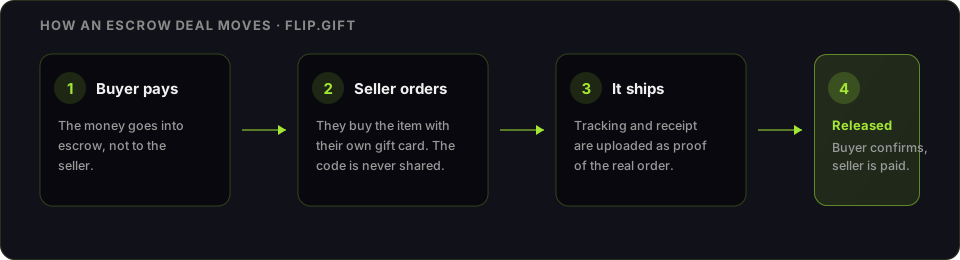
Put a $200 order side by side. With Lolli at a typical 5%, you pay $200 and receive about $10 of bitcoin some weeks later. Through an escrowed proxy order at 20% off, you pay $160 now, plus a 2.5% platform fee — $164 — and the $36 you did not spend stays yours in whatever you already hold.
The mechanisms are not rivals so much as opposites: one pays you to spend dollars, the other lets you spend stablecoins for less than the sticker.
| Lolli | FlipGift | |
|---|---|---|
| What you pay with | Your ordinary card, in dollars | USDT, USDC, DAI or PYUSD |
| Price of the goods | The store's full price | 8–40% below the store's price |
| What you receive back | Bitcoin, typically 3–10%, later | Nothing back — the discount is in the price |
| When | After the return window | At checkout, before you commit |
| Stores | 10,000+ partners | 200 US stores that ship goods |
| Risk | Tracking can fail on a purchase | Escrow holds until delivery is confirmed |
Nothing stops you using both, on different purchases. But if you are holding stablecoins and looking for a way to turn them into things, Lolli is not that route. This is →
Facts about Lolli above were checked on 1 September 2026; the Thesis acquisition (July 2025) and Spark-powered Lightning withdrawals (December 2025) are from the companies' own announcements.
Other routes, compared the same way
Bitrefill · BitPay · eGifter · CoinGate · Coinsbee · Gyft · CoinCards · CryptoRefills · NoOnes · Fold · Purse.io · Paxful
One page per service, each saying where that service is the better tool than an escrowed order. How ours works →
Frequently asked questions
Is Lolli legit?
Can I spend my crypto with Lolli?
Is bitcoin back the same as a discount?
How much do you save through an escrowed order instead?
From the blog
How to Verify Gift Card Balance Before Trading a Card
Before you list, swap, or sell a gift card, confirm what's actually on it. Here's why balance checks matter and the three fastest ways to do one.
Can You Return Gift Cards? The Real Rules in 2026
Most stores treat gift cards as final-sale. But there are real exceptions — and if yours doesn’t qualify, you still have a way to get full value out.
What to Do With Unwanted Gift Cards: 6 Smart Options
Stuck with a card you'll never use? Here are six realistic options for unwanted gift cards, ranked by how much value you actually keep.